

How To Clear Congestion In Your Throat
Nasal congestion and rhinorrhea (runny nose) are extremely common problems that commonly occur together but occasionally occur alone.
The most common causes (see table ) are the following:

Patients who use topical decongestants for > 3 to 5 days often experience significant rebound congestion when the effects of the drug wear off, causing them to continue using the decongestant in a vicious circle of persistent, worsening congestion. This situation (rhinitis medicamentosa) may persist for some time and may be misinterpreted as a continuation of the original problem rather than a consequence of treatment.
History of present illness should determine the nature of the discharge (eg, watery, mucoid, purulent, bloody) and whether discharge is chronic or recurrent. If recurrent, any relation to patient location, season, or exposure to potential triggering allergens (numerous) should be determined. A unilateral, clear, watery discharge, particularly when following head trauma, can signify cerebrospinal fluid (CSF) leak. CSF discharge also can occur spontaneously in obese women in their 40s, secondary to idiopathic intracranial hypertension.
Review of systems should seek symptoms of possible causes, including fever and facial pain (sinusitis); watery, itchy eyes (allergies); and sore throat, malaise, fever, and cough (viral upper respiratory infection [URI]).
Past medical history should seek known allergies and existence of diabetes or immunocompromise. Drug history should ask specifically about topical decongestant use.
Vital signs are reviewed for fever.
Examination focuses on the nose and area over the sinuses. The face is inspected for focal erythema over the frontal and maxillary sinuses; these areas are also palpated for tenderness. Nasal mucosa is inspected for color (eg, red or pale), swelling, color and nature of discharge, and (particularly in children) presence of any foreign body.
The following findings are of particular concern:
-
Unilateral discharge, particularly if purulent or bloody
-
Facial pain, tenderness, or both
Symptoms and examination are often enough to suggest a diagnosis (see table ).
In children, unilateral foul-smelling discharge suggests a nasal foreign body Nasal Foreign Bodies Nasal foreign bodies are found occasionally in young children, the intellectually impaired, and psychiatric patients. Common objects pushed into the nose include cotton, paper, pebbles, beads... read more . If no foreign body is seen, sinusitis Sinusitis Sinusitis is inflammation of the paranasal sinuses due to viral, bacterial, or fungal infections or allergic reactions. Symptoms include nasal obstruction and congestion, purulent rhinorrhea... read more 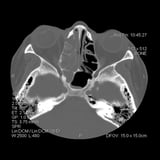 is suspected when purulent rhinorrhea persists for > 10 days along with fatigue and cough.
Testing is generally not indicated for acute nasal symptoms unless invasive sinusitis is suspected in a diabetic or immunocompromised patient; these patients usually should undergo CT. If a CSF leak is suspected, a sample of the discharge should be tested for the presence of beta-2 transferrin, which is highly specific for CSF.
Specific conditions are treated. Symptomatic relief of congestion can be achieved with topical or oral decongestants. Topical decongestants include oxymetazoline, 2 sprays each nostril once/day or 2 times a day for 3 days. Oral decongestants include pseudoephedrine 60 mg 2 times a day. Prolonged use should be avoided.
Viral rhinorrhea can be treated with oral antihistamines (eg, diphenhydramine 25 to 50 mg orally 2 times a day), which are recommended because of their anticholinergic properties unrelated to their H2-blocking properties.
Allergic congestion and rhinorrhea can be treated with antihistamines; in such cases, nonanticholinergic antihistamines (eg, fexofenadine 60 mg orally 2 times a day) as needed provoke fewer adverse effects. Nasal corticosteroids (eg, mometasone 2 sprays each nostril daily) also help allergic conditions.
Antihistamines and decongestants are not recommended for children < 6 years.
Antihistamines, particularly first-generation antihistamines such as diphenhydramine, can have sedating and anticholinergic effects and should be given in decreased dosage in older people. Similarly, sympathomimetics should be used with the lowest dosage that is clinically effective.
-
Most nasal congestion and rhinorrhea are caused by URI or allergies.
-
A foreign body should be considered in children.
-
Rebound from topical decongestant overuse should also be considered.
How To Clear Congestion In Your Throat
Source: https://www.merckmanuals.com/professional/ear,-nose,-and-throat-disorders/approach-to-the-patient-with-nasal-and-pharyngeal-symptoms/nasal-congestion-and-rhinorrhea
Posted by: garrisoncrinver.blogspot.com
0 Response to "How To Clear Congestion In Your Throat"
Post a Comment