

How To Clean My Windows 10 Computer

Just similar your fridge, a computer's storage space needs to be cleaned out every in one case in a while to keep things running smoothly. "Temporary" files can become left behind permanently, and big updates to Windows may create many gigabytes of backup files that you never end up using.
Many junk file cleaning apps go besides far, still, such equally deleting your web browser cache, which will refill itself anyway over time and whose files help yous load websites faster. Let's show you how to tidy things up yourself, using Windows' own built-in tools.
The Disk Cleanup tool
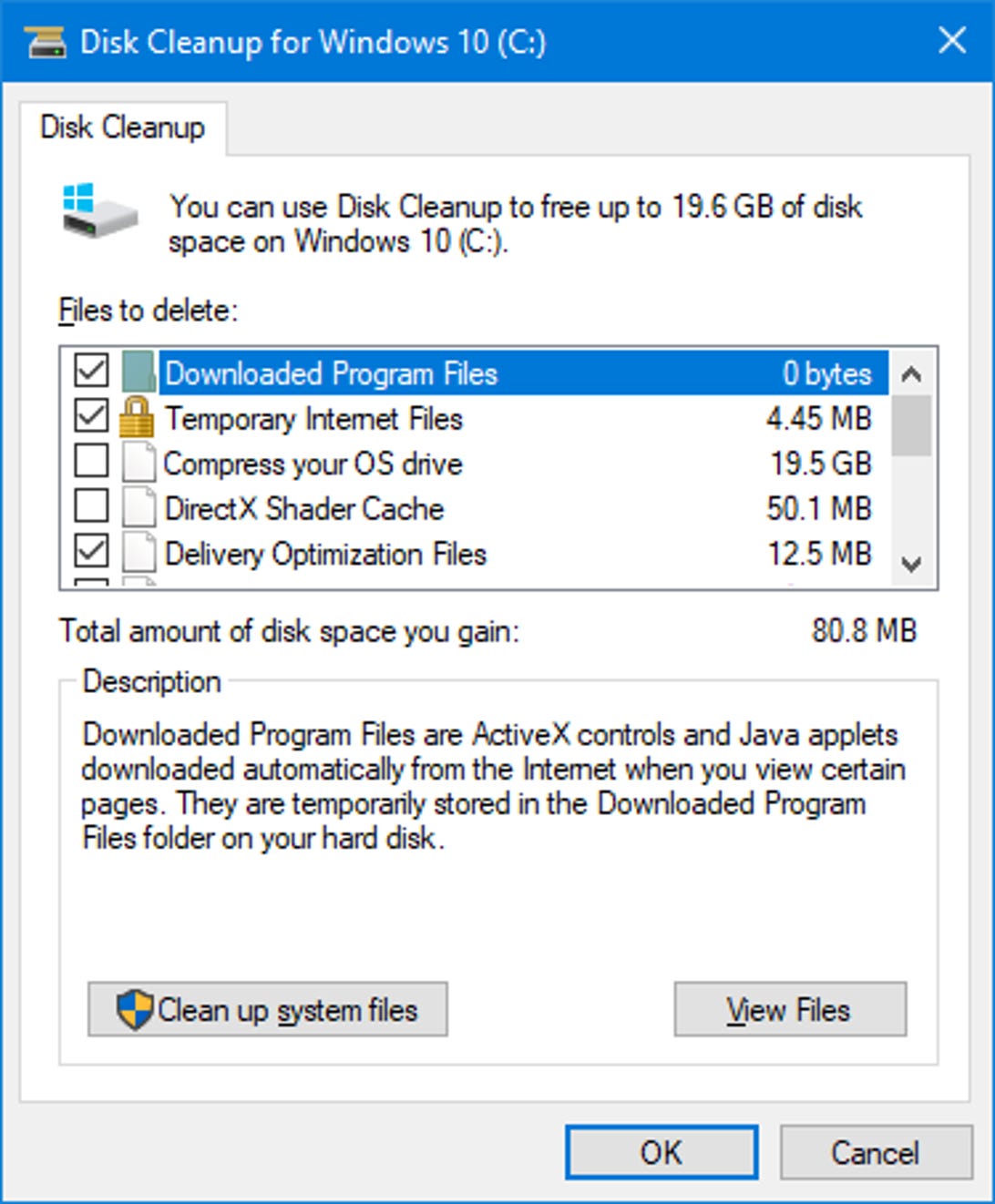
Every storage device in your computer has access to the Disk Cleanup tool. Find information technology by clicking the Start button, typing "disk cleanup" (whenever I say to type something, I mean without the quotes), and clicking the Disk Cleanup shortcut in your search results. Click and drag this shortcut to your desktop or taskbar for easier admission next time. Yous can also notice the tool past right-clicking a storage device in File Explorer, selecting Properties, and clicking the Deejay Cleanup push button to the correct of the pie nautical chart.
Sometimes the shortcut doesn't testify up in your search results. If this is the case, instead of typing "disk cleanup," type "free up disk space." A phrase may piece of work when the proper noun of the program doesn't.
If you have a lot of stuff to clean upwardly, information technology may take the tool several minutes to clarify your situation and get your cruft organized for deletion. Once that's washed, you'll be presented with a new window containing a listing of things that are safe to delete. Some boxes are even prechecked, such as the i next to Temporary Internet Files.
Browser and thumbnail caches
Browser and thumbnail caches can eat several gigabytes. When you load a webpage, it gets stored here for quicker access subsequently, and then cleaning out the cache can brand futurity browsing slower.
Chrome and Firefox caches get cleaned from inside those apps through a menu accessed by pressing Ctrl+Shift+Delete when the browser is open. It's preferable to do information technology within the browser, because you get more than detailed control over what you want to keep and become rid of.
While wiping your browser cache only temporarily frees upwardly space, it doesn't hurt to periodically wipe it clean and kickoff fresh, if you have security or privacy concerns.

Dealing with thumbnails
The Disk Cleanup tool has one listing item specifically for thumbnails. Thumbnails include things like app icons and motion picture previews. But if y'all clear out this cache, Windows will accept to regenerate those images the next time you lot view a folder with a lot of media or icons in it. Each thumbnail will likewise take fourth dimension to recreate, so a big folder may take several minutes to rebuild its cache. If you lot're looking for a specific picture or video, you lot may have to await until the thumbnail has been created, unless you know its file name.
We recommend leaving the Thumbnails item in Disk Cleanup unchecked, unless the cache size is creating problems with your available gratuitous space.
System files
The biggest hoarders of your deejay space are probably organization files, so click the Clean up arrangement files button to access them. This will perform another analysis, which can take a few minutes, especially if information technology detects those Windows Update backup files that we mentioned earlier. Then it will load a window that looks exactly similar the analysis results window yous saw in Disk Cleanup.
This time, however, there are additional items in the listing. If y'all're using Windows vii ($28 at Amazon), you may find several gigabytes of Service Pack Fill-in Files listed. In theory, this archive can exist used to undo a service pack. In practice, it takes up a load of space, and it would be faster and more reliable to just restore from a previous backup image than to undo a service pack.

System Restore
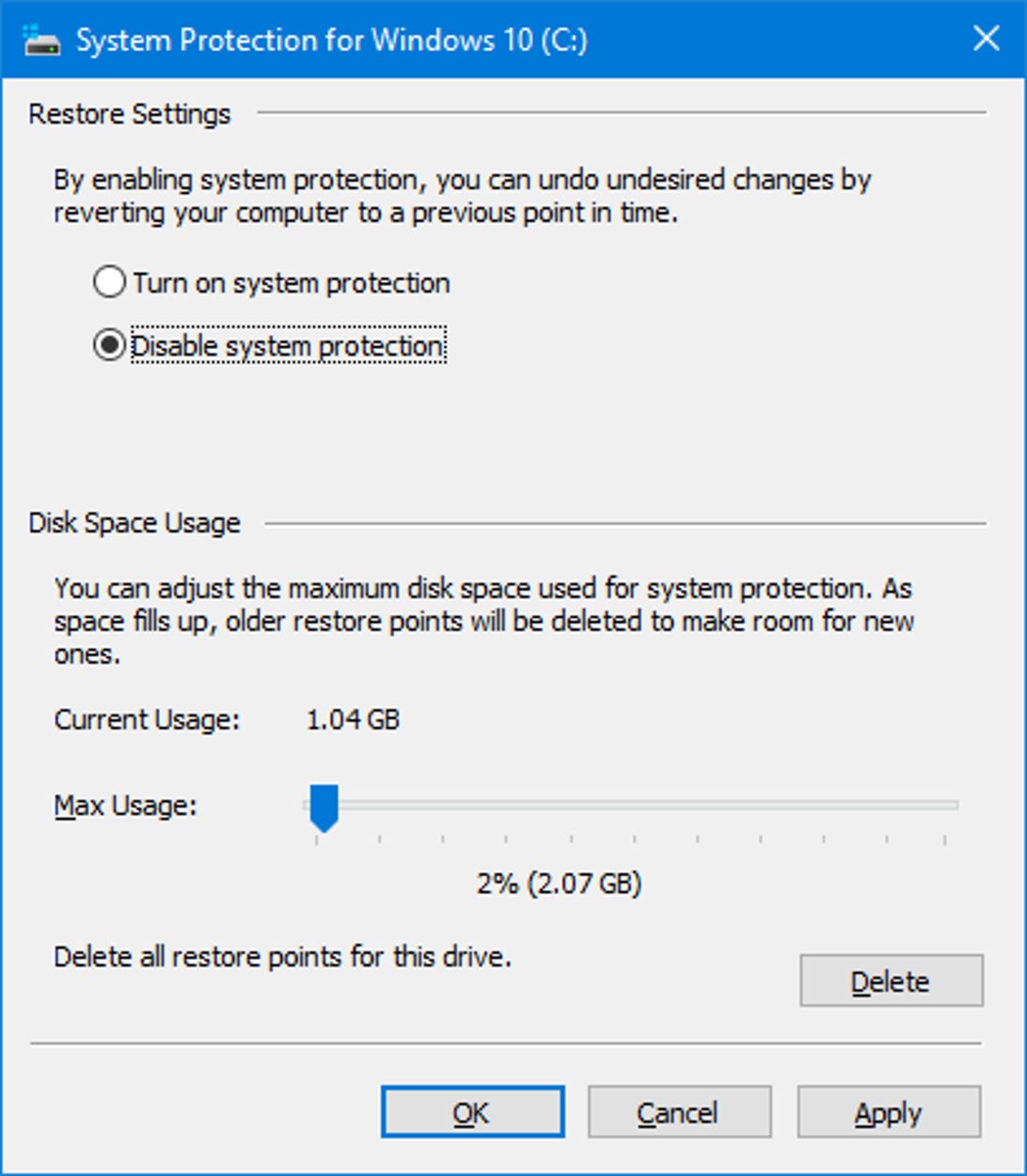
Windows uses System Restore to preserve organisation files in case they're accidentally deleted or corrupted. A system restore is like a bookmark or snapshot that the operating system tin can go back to. It doesn't back up the entire contents of your storage device, then it may non assist you if you tin't boot Windows at all. And these periodic bookmarks can end upwards hogging a lot of space. In fact, in Windows viii and ten, System Restore is disabled by default, so y'all shouldn't demand to mess with its settings unless yous've enabled the feature yourself.
Unfortunately, Windows doesn't let you choose which restore points you want to go on, nor does it easily tell you how much disk space your restore points are taking up. The Disk Cleanup tool lets yous delete all but the virtually recent one, and that's nigh it. To do so, become to the Disk Cleanup tool. Click Clean up organisation files, so the More Options tab, then go down to the System Restore and Shadow Copies section, then click the Clean Up push, and finally the Delete push to confirm.
Exercise you want to delete all your restore points? For that, you lot need a dissimilar tool. Click the Offset bill of fare button, right-click Reckoner, select Properties, click the System Protection link on the left-mitt side, and click the Configure button to access your Organization Restore settings. If you don't have a Computer shortcut on your Kickoff carte or your desktop, click the Start button, type "estimator" to get it to come up up in your search results, right-click it, select Backdrop, and yous will be at the window where you click Organization Protection. And then click Configure.
You can disable System Restore altogether, tell Windows what percentage of disk space you want to dedicate to System Restore, and click the Delete button to delete all restore points. This window as well shows you how much infinite your Organisation Restore points are taking up. Past default, Windows 7 sets aside about five per centum of your storage device for restore points. So, in theory, it won't get crowded. Simply if yous have a roomy storage device, that five percent can add upwardly to a lot of gigabytes that may exist better used elsewhere. And overall, creating organisation backup images and storing them on an external drive (or even in the cloud) will give you amend control and more consistent results.
The hibernation cache
When yous turn off your Windows device, it can put your open apps and open up files in a large file called the hibernation cache, to assistance you pick up where you left off when you turn your PC on later. Alternatively, sleep mode keeps this data in your system RAM and puts the device in a low-power fashion. Hibernation mode doesn't depict battery ability, then information technology'due south better for laptops and tablets. But it takes longer to kick up than restoring from sleep manner, which is more than or less instant, and so y'all cede some convenience.
If your Windows device is commonly plugged into a power outlet, hibernation manner probably won't be as useful as sleep way, and then you should be able to disable the hibernation cache without side effects. The storage infinite that you salvage is roughly equal to how much organization RAM your device has.
To disable hibernation, click the Beginning button, blazon "cmd", right-click cmd.exe, select Run as Ambassador, and click Yes to confirm. This is the Windows command prompt. Paste "powercfg.exe /hibernate off" into the control prompt. Ctrl-V doesn't piece of work here in Windows 7, though. Instead, you accept to right-click in the window and select Paste. So hit Enter. If you want to re-enable hibernation mode later, paste "powercfg.exe /hibernate on". The change will take effect immediately.

Managing the Recycle Bin
When you delete a file, Windows doesn't erase information technology by default. The file just goes to the Recycle Bin, where it will stay until you tell Windows to empty the bin. And then the bin needs to exist checked periodically to make certain your deejay space isn't being used up by big files yous no longer need.
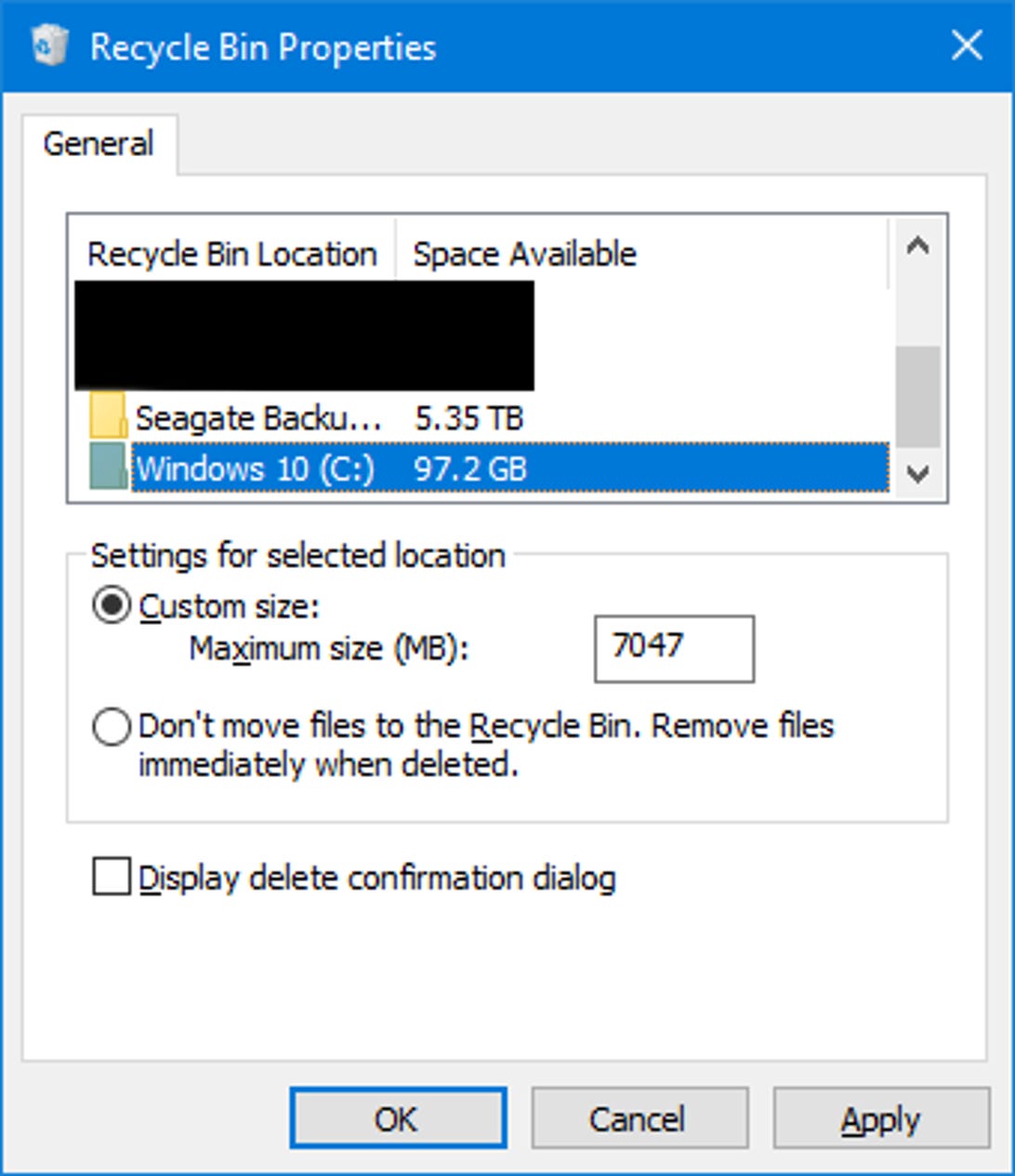
You tin can also adjust how much storage the Recycle Bin uses. To practise so, open up the File Explorer (press Windows+Due east), detect the bin in the left-hand pane, right-click information technology, and select Properties. The bin might not exist displayed by default, in which case you need to right-click in the left-hand pane and select Show All Folders. (The Bin is technically a folder.)
In the Recycle Bin properties window, you tin tell Windows the maximum corporeality of space you desire to use for the bin. The default is 5 pct of your C: drive'due south storage capacity, and you can increase that to 10 percent. Y'all can as well tell Windows to skip the bin altogether, as well every bit disable the confirmation prompt that pops up when you lot effort to delete a file. When you're done making your changes, click the OK button to salvage them.

Source: https://www.cnet.com/how-to/clean-out-junk-files-in-windows-10/
Posted by: garrisoncrinver.blogspot.com
0 Response to "How To Clean My Windows 10 Computer"
Post a Comment